Nothing ruins a homeowner’s morning quite like opening a billing statement from the Los Angeles Department of Water and Power (LADWP) or California Water Service and seeing an astronomical bill of $600, $900, or even $2,000+. Because LADWP utilizes tiered water pricing—where rates escalate steeply once you exceed your base allocation (Hundred Cubic Feet or HCF)—a hidden leak doesn't just increase your water charges; it kicks you into the highest Tier 3 and Tier 4 punitive rate brackets and dramatically hikes your sewer service charges.
The 15-Minute DIY Water Meter Test
Before calling LADWP customer service to contest the meter, you can verify whether water is physically leaking on your property in under 15 minutes:
- Shut Off All Water Fixtures: Ensure every sink, shower, garden hose, pool autofill valve, and irrigation controller is turned OFF. Do not run dishwashers or washing machines.
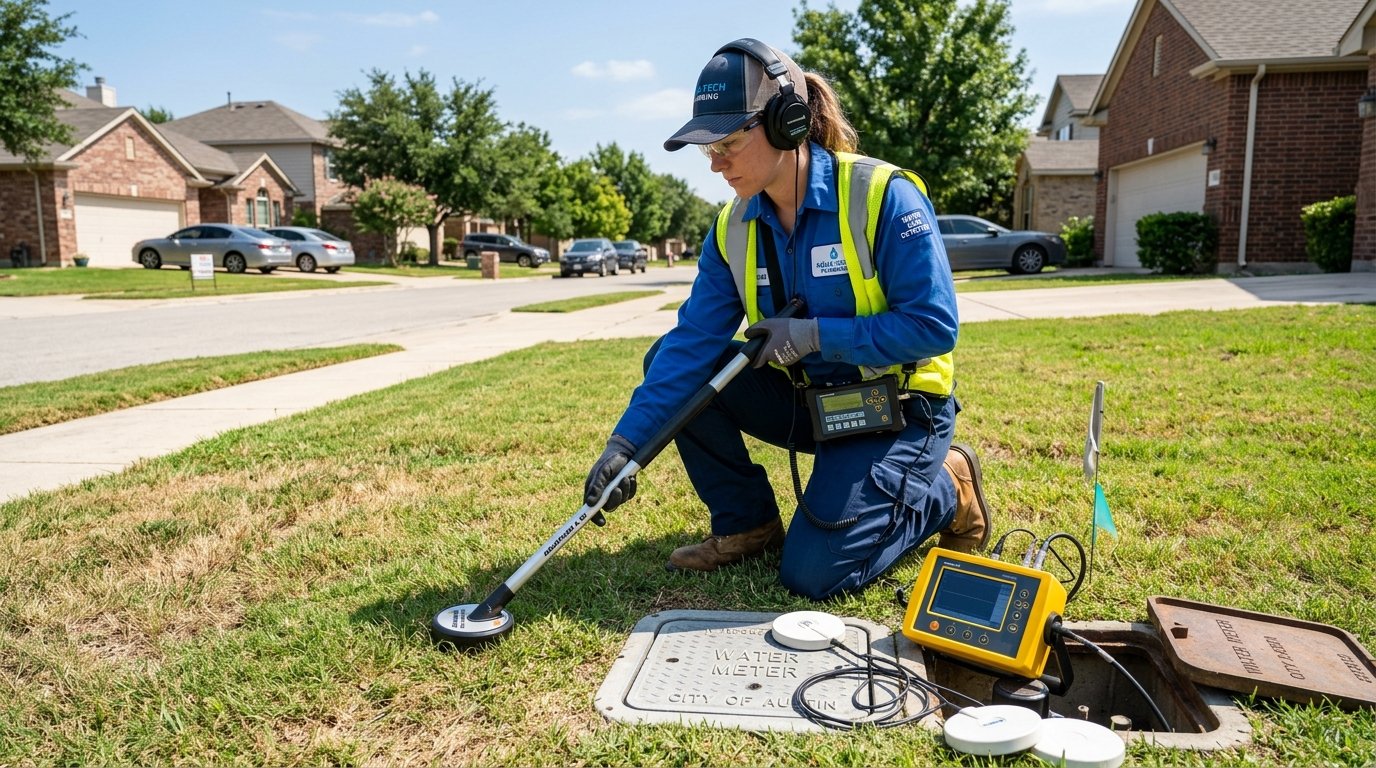
- Locate Your Water Meter Box: Find the concrete or cast iron meter box in your front lawn or sidewalk parkway near the curb. Carefully remove the lid with a large flat screwdriver.
- Inspect the Low-Flow Indicator:
- Analog Dials: Look for a small red, blue, or silver triangle, star, or gear wheel. If this tiny dial is slowly rotating while all fixtures are off, water is actively flowing.
- Digital Smart Meters: Look for a flashing faucet icon or a decimal reading that is ticking upward.
How to Isolate the Leak: Yard Line vs. House Interior / Slab
If the meter indicator is spinning, you can pinpoint whether the leak is outside in the yard or inside your home's foundation with one simple step:
The Main House Shutoff Valve Test
Locate your home’s primary water shutoff valve (usually situated on an exterior wall near your hose bib or in the garage). Turn this valve completely OFF.
- Scenario A: The Meter Stops Spinning: This proves the leak is located past the shutoff valve—inside your home’s walls, ceilings, fixtures, or pressurized copper pipes underneath your concrete foundation (a slab leak).
- Scenario B: The Meter Keeps Spinning: This proves the leak is located before the house valve—in the underground yard line running from the city meter to your home’s foundation.
The 4 Most Common Culprits Behind Spiking LA Water Bills
| Leak Source | Gallons Wasted per Day | Typical Monthly Cost Impact | Key Symptoms |
|---|---|---|---|
| Silent Running Toilet Flapper | 150 – 300 gal/day | $60 – $180 / billing cycle | Intermittent phantom hissing, water ripples in bowl. |
| Underground Yard Service Line | 500 – 2,000+ gal/day | $250 – $800+ / billing cycle | Spongy, unusually green patches of grass, sinkholes. |
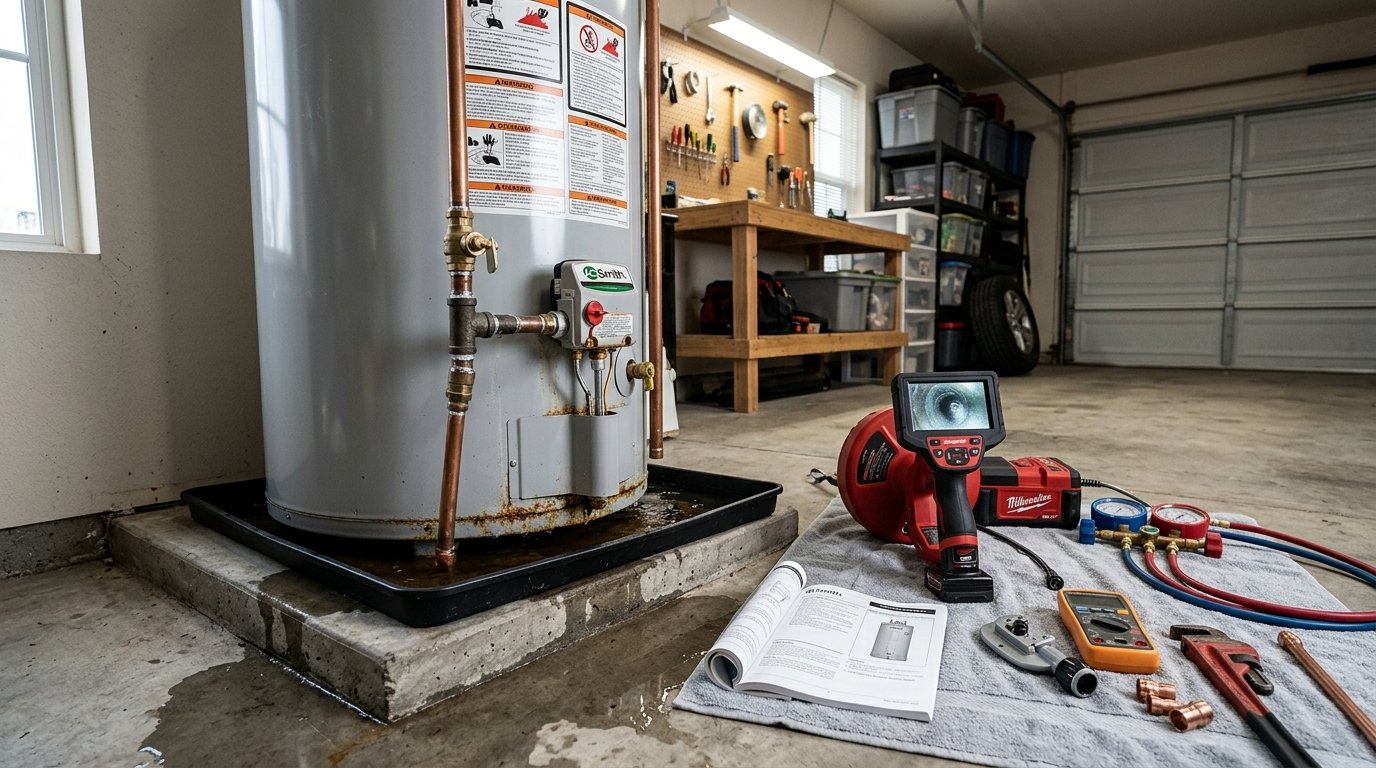
| Hot-Line Concrete Slab Leak | 300 – 1,500 gal/day | $300 – $1,000+ (Water + Gas) | Warm flooring tiles, faint hissing sound, water heater constantly cycling. |
| Broken Irrigation / Solenoid Valve | 400 – 1,200 gal/day | $150 – $500 / billing cycle | Sprinkler heads weeping water hours after cycle ends. |
How Professional Electronic Leak Detection Works
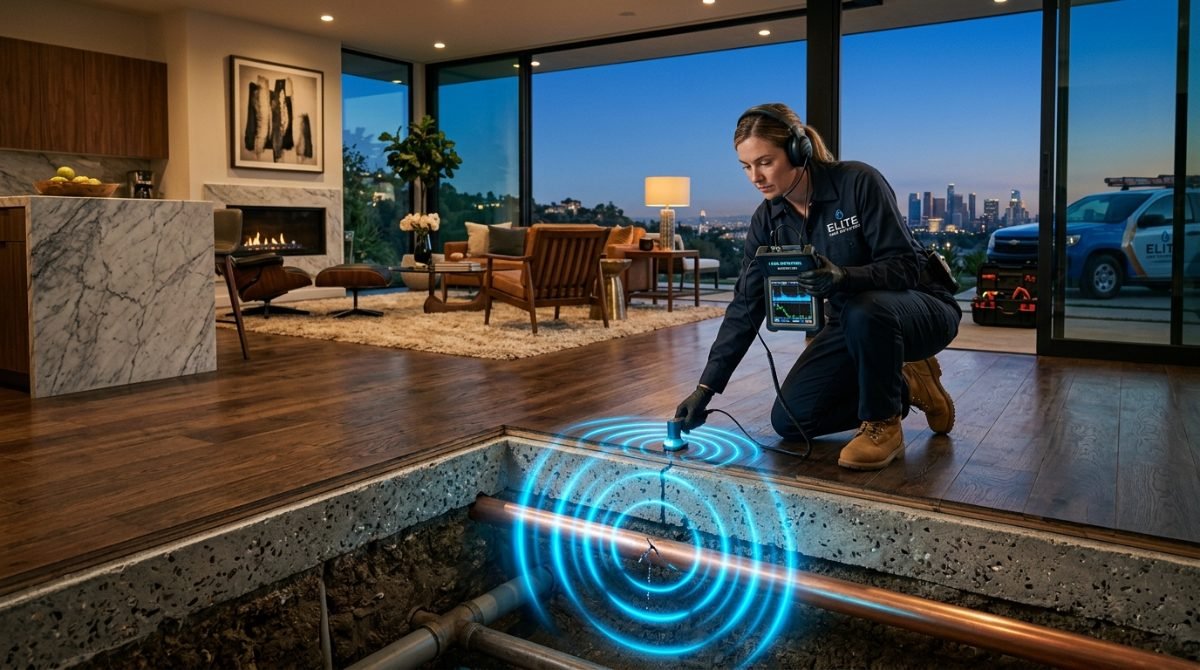
Guessing where a leak is located and sledgehammering floors or trenching across lawns randomly is expensive and destructive. Professional plumbers use pinpoint diagnostic instruments:
- Ultrasonic Acoustic Microphones: Sensors placed on pipe fittings and ground surfaces amplify the high-frequency sound of pressurized water escaping through hairline fissures.
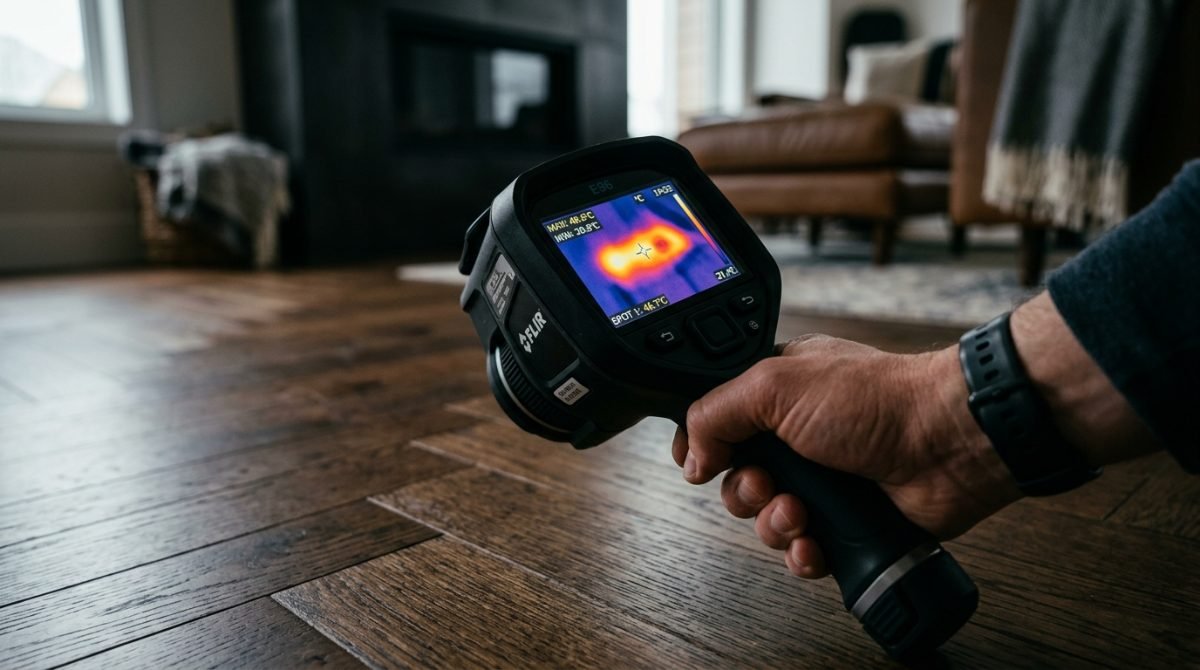
- FLIR Thermal Imaging: High-resolution infrared cameras detect temperature differentials caused by hot water slab leaks radiating through concrete and hardwood.
- Helium & Nitrogen Tracer Gas: Non-toxic tracer gas is introduced into isolated pipe segments to detect micro-leaks beneath dense soil or concrete.
How to Claim the LADWP Underground Leak Adjustment Credit
Did you know LADWP allows customers to receive a partial refund or billing credit if an underground leak caused the bill spike? Here is how to qualify:
- The leak must be in an underground supply line, under-slab plumbing, or inaccessible piping (leaking toilets or faucets do NOT qualify).
- You must hire a licensed C-36 plumbing contractor to diagnose and repair the issue.
- Obtain an itemized receipt with the plumber’s CSLB license number (#1049281), the date of repair, the exact footage or location of the underground leak, and confirmation that water flow stopped.
- Download and submit the LADWP Customer Application for Leak Adjustment within the mandated timeframe. LADWP will recalculate your bill to average historical usage, crediting hundreds of dollars.
Stop the Waste: Call Aquavo Plumbing Today
Every day an underground leak goes unaddressed, gallons of municipal water are wasted and your tiered billing multiplies. Contact Aquavo Plumbing for same-day non-invasive leak detection across the San Fernando Valley.
Frequently Asked Questions: High Water Bills & Leaks
How can I check for a leak using my LADWP water meter?
Shut off all water fixtures in your home. Go to the meter box by the curb. If the small low-flow indicator triangle or digital dial is moving, water is leaking somewhere on your property.
Does LADWP reimburse you for leak repairs?
LADWP does not pay the plumber's repair bill, but they offer an Underground Leak Adjustment that credits back the excess water and sewer charges on your bill once a licensed C-36 contractor verifies the repair.
How much does professional leak detection cost in Los Angeles?
Non-invasive electronic leak detection in Los Angeles typically ranges from $295 to $550. This includes acoustic sensor analysis, thermal imaging, and pinpointing the exact location before any drywall or concrete is opened.
What if my water meter is spinning but I have no damp spots?
In Southern California's dry, expansive clay soils, water from an underground yard leak or deep slab leak can drain straight into subterranean soil strata or beneath concrete footings without pooling on the surface for weeks.