Whether you discover a warm damp spot under your hardwood floor, notice unexplained water stains blooming across your ceiling, or face sudden flooding during an uncharacteristic winter cold snap, an undetected plumbing leak can inflict catastrophic structural damage within hours. Finding dependable plumbing leak repair near me in Los Angeles is essential to protecting your property's value and structural integrity.
In this comprehensive guide from our licensed California master plumbers, we explore the primary causes of hidden plumbing leaks, how to identify a dangerous plumbing pipe leak, when older cast iron plumbing needs replacement, and how professional pipe repair plumbing specialists permanently resolve pipe failures.
Common Causes of a Plumbing Pipe Leak in Southern California Homes
While homeowners in colder states deal primarily with winter freezing, Southern California homes experience a distinct set of plumbing vulnerabilities:
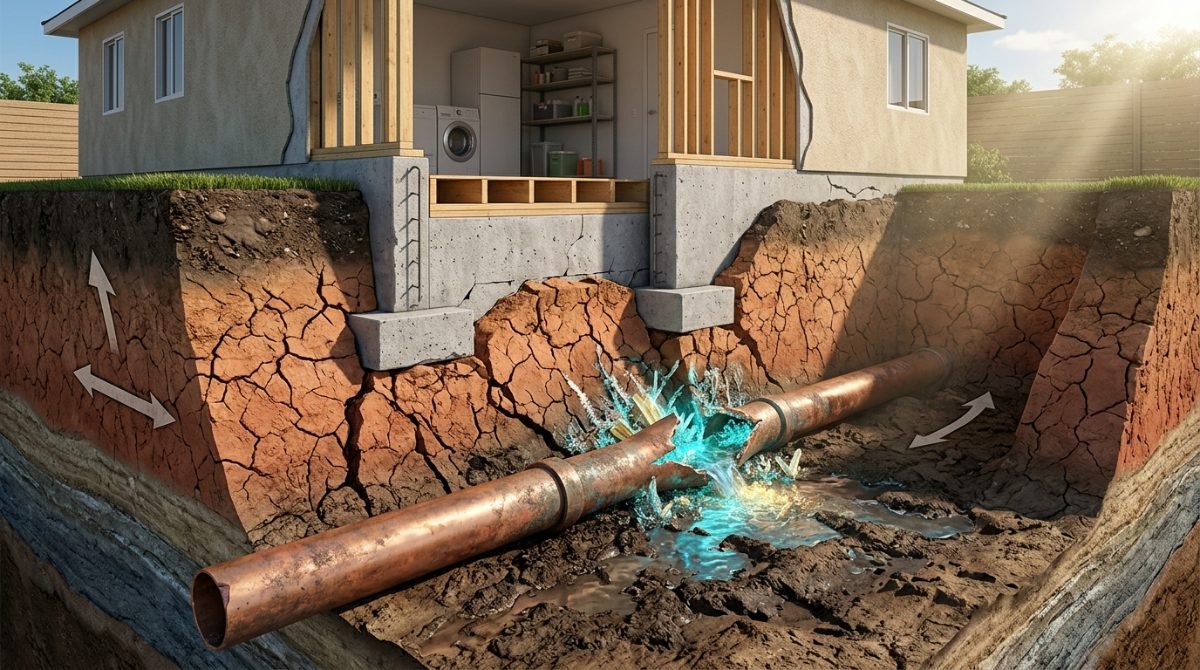
- Aggressive Municipal Water Hardness (14–20+ GPG): Dissolved calcium and magnesium in water imported from the Colorado River Aqueduct and State Water Project creates electrolytic oxidation inside copper pipes, leading to microscopic pinhole plumbing leaks beneath concrete slab foundations.
- Deteriorating Cast Iron Plumbing: Thousands of historic homes across Los Angeles, Pasadena, Glendale, and Long Beach built before 1975 contain original cast iron drain and waste lines. When homeowners search for cast iron plumbing near me, it is often because hydrogen sulfide gas has eaten through the top or bottom of the pipe, causing foul sewer odors, slow drains, and subterranean leaks.
- Expansive Adobe Clay Soil Shifts: San Fernando Valley soils expand dramatically during wet winter atmospheric rivers and shrink in dry summer heat. This ground movement places intense shear stress on rigid pipe joints, snapping underground copper and clay lines.
- Elevation-Induced Water Pressure Spikes: Steep hillside elevations in areas like Agoura Hills, Santa Clarita, and Westlake Village often see municipal water pressure surging past 100+ PSI, blowing out supply lines and water heater connections without a functional pressure reducing valve.
Why Winter Cold Snaps Trigger Sudden Pipe Bursts
Even in sunny Southern California, overnight winter temperatures in foothill pockets—such as Santa Clarita, Woodland Hills, and the San Gabriel Valley—frequently plunge into the upper 20s (°F). Because local homes are engineered for ventilation rather than freeze protection, water lines are frequently routed along uninsulated exterior walls or across drafty attics.
When water freezes, it expands by approximately 9% in volume, creating an immovable ice plug. As water continues to flow into the frozen section, hydraulic pressure skyrockets past 2,000 PSI, rupturing the copper or galvanized pipe wall upstream. Calling an experienced plumber for frozen pipes immediately upon discovering a frozen line prevents a catastrophic structural blowout.
Emergency Steps: What to Do When You Notice a Plumbing Pipe Leak
If you suspect an active leak or a frozen pipe, take these immediate emergency precautions before water ruins your flooring and drywall:
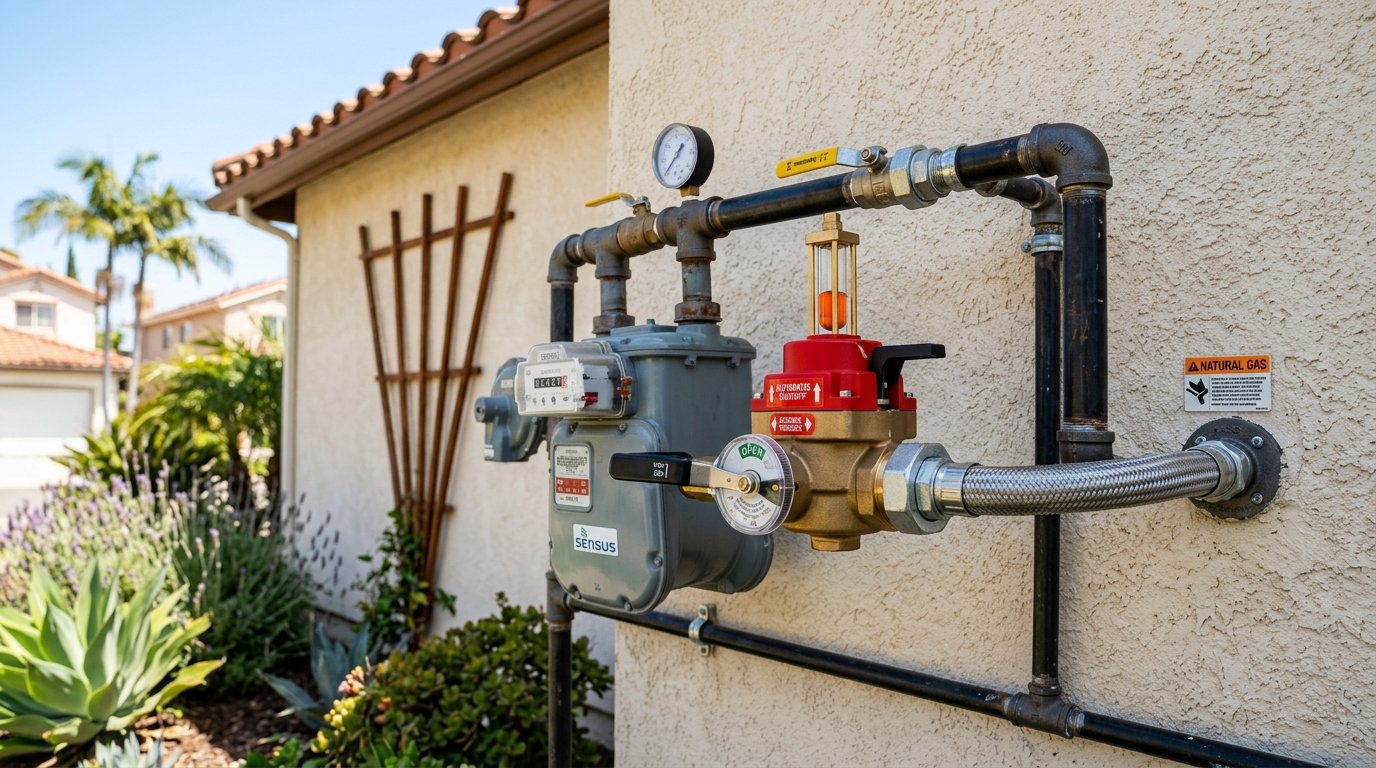
- Shut Off the Main Water Supply Valve Immediately: Locate your primary residential shutoff valve (typically located by the front hose spigot or sidewalk water meter box) and rotate it a quarter-turn clockwise. This cuts off municipal pressure and limits flood damage.
- Open Faucets to Depressurize the System: Open both hot and cold faucets at the lowest and highest points in the house to drain remaining water out of the lines.
- Never Apply an Open Flame to Thaw Pipes: Using a blowtorch or propane heater on frozen lines can boil trapped water into explosive steam and poses an extreme fire hazard in residential attics and wall cavities.
- Call for Emergency Plumbing Leak Repair: Contact our 24/7 dispatch desk for immediate professional leak isolation and diagnostic scans.
How Professional Pipe Repair Plumbing Protocols Work
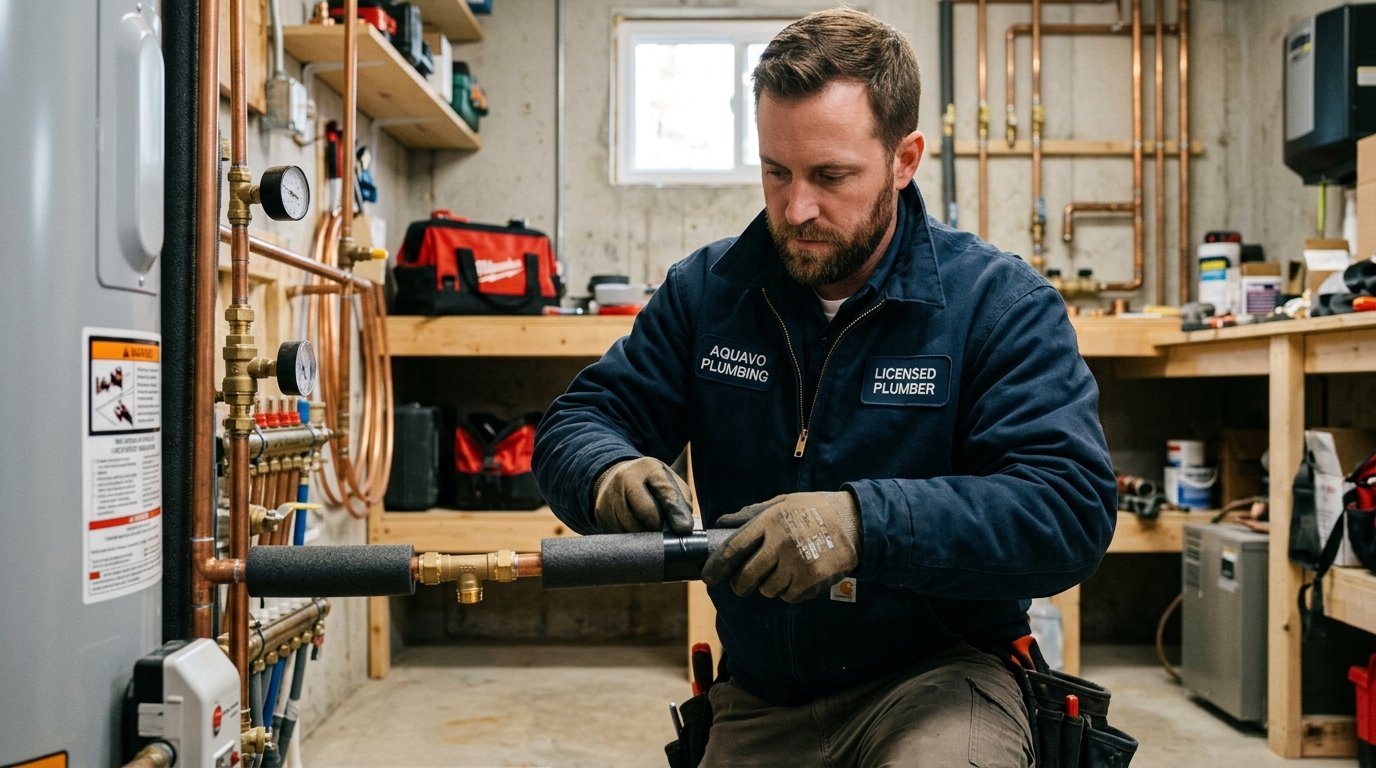
When our licensed C-36 technicians arrive on-site, we follow rigorous pipe repair plumbing protocols designed to resolve the failure permanently rather than applying temporary band-aids:
- Acoustic & Thermal Leak Detection: We deploy electronic listening discs and infrared thermal imaging cameras to pinpoint hidden slab leaks within inches, avoiding destructive trial-and-error demolition.
- Sectional Copper & PEX-a Rebuilds: For burst or damaged lines, we excise the fractured segment and install commercial-grade Type L copper with silver-brazed joints or expand Uponor PEX-a tubing with cold-expansion ProPEX fittings. PEX-a expands up to three times its diameter without bursting, providing superior freeze defense.
- Trenchless Cast Iron Rehabilitation: For failing cast iron drain lines, we utilize high-pressure hydro jetting to descale the pipe interior, followed by cured-in-place pipe (CIPP) epoxy lining that creates a brand new, jointless pipe inside the old host line with zero trench digging.
- Whole-Home Hydrostatic Pressure Verification: Every repair concludes with a 15-minute static pressure test to guarantee 100% leak-free integrity under full municipal flow.
Winter Freeze & Plumbing Leak Prevention Checklist
Protect your property and avoid costly emergency repairs with these practical preventative maintenance habits:
- Insulate Exterior Water Lines: Wrap all outdoor copper pipes, backflow preventers, and pool equipment supply lines with closed-cell polyethylene foam insulation sleeves.
- Disconnect Outdoor Garden Hoses: Detach hoses before cold snaps; trapped water inside an attached hose can freeze and drive ice backward into the brass sillcock, splitting the interior wall pipe.
- Drip Faucets During Hard Freezes: When freezing temperatures are forecast, let a faucet furthest from the main water meter drip at a pencil-thin trickle to keep water moving and relieve hydraulic pressure.
- Upgrade Aging Pipes: If your home still has original 1950s–1970s galvanized steel or failing copper lines, consider upgrading your infrastructure. Explore our detailed guide on Signs Your Home Needs Repiping or review our full Whole-Home Copper and PEX Repiping Services.
Need Emergency Plumbing Leak Repair Near You?
Our licensed emergency plumbers and pipe repair specialists are staged across Los Angeles and the San Fernando Valley for rapid 24/7 dispatch.
This Isn't a Substitute for a Professional Inspection
These guides are designed to help you understand plumbing symptoms and technical options. If you suspect an active leak, sewer backup, or gas odor, contact our licensed C-36 technicians immediately for a safe evaluation.