Behind the finished drywall and designer tile of your home operates one of the most sophisticated mechanical networks in modern engineering: your residential plumbing system. Most homeowners never give a second thought to their pipes until a fixture backs up, water pressure vanishes, or an emergency leak threatens their property. When you urgently need plumbing help, understanding the fundamentals of how residential plumbing systems work empowers you to take decisive action, prevent catastrophic water damage, and communicate effectively with your licensed plumbing contractor.
Whether you are planning a room addition, undertaking a full remodel, or organizing a new plumbing system installation for a custom residential build in Greater Los Angeles, this comprehensive guide explains how water enters your home, circulates under pressure, and safely exits through gravity-assisted drainage systems.
The Two Distinct Circuits of Residential Plumbing Systems
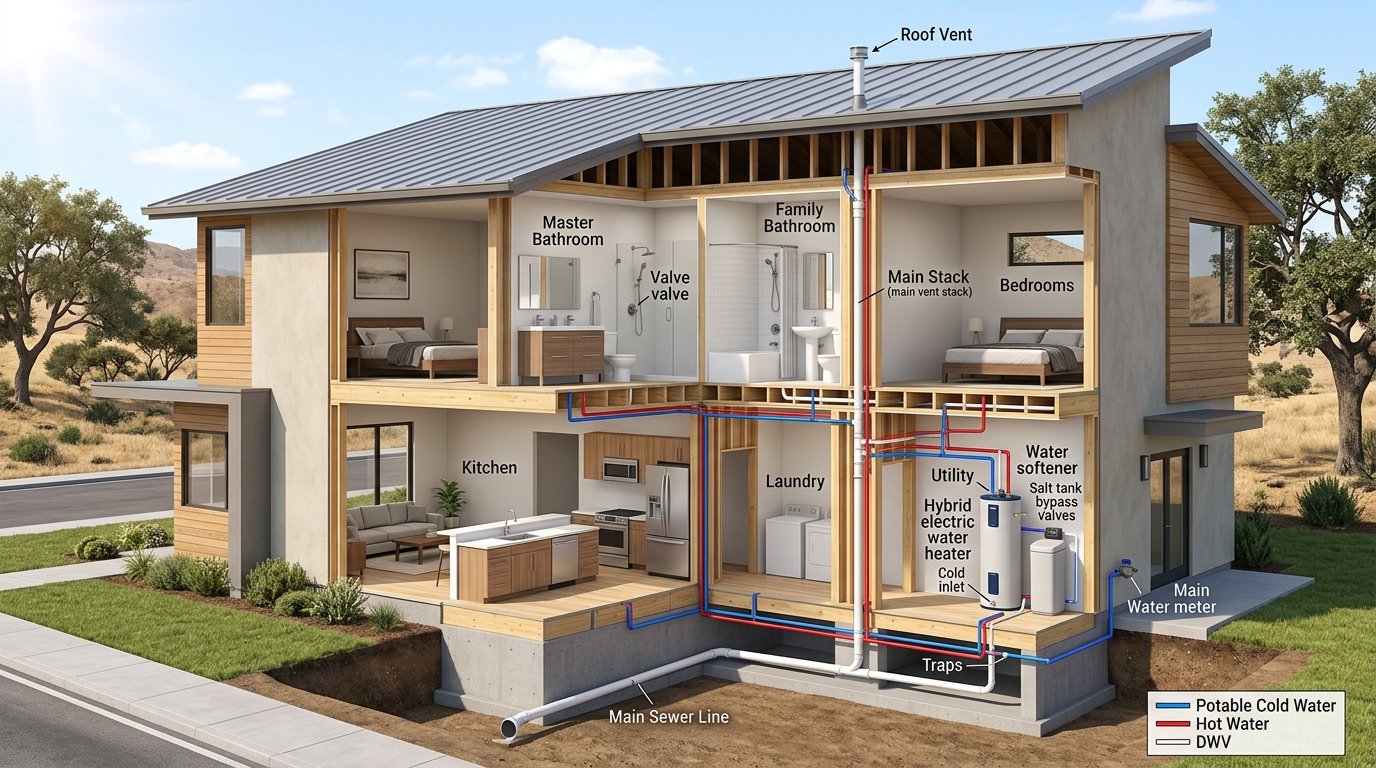
Every home contains two completely independent plumbing subsystems that operate side-by-side without ever cross-connecting (to prevent contamination of your drinking water):
- The Potable Water Supply System (High-Pressure Inflow): A pressurized closed loop delivering clean, treated municipal water from the city main into your home at 50 to 75 PSI. This water feeds drinking taps, showers, toilets, dishwashers, and water heaters.
- The Drain-Waste-Vent (DWV) System (Gravity-Assisted Outflow): An unpressurized, gravity-driven network of larger pipes engineered to collect greywater (sinks, tubs) and blackwater (toilets) and route it out to the municipal sewer main, while venting dangerous sewer gases outside through roof stacks.
Part 1: The Potable Water Supply Network
Here is the chronological pathway fresh water takes as it enters your Los Angeles property:
1. The Municipal Water Meter & Curb Stop
Water arrives at your property boundary through the city main line under the street. The municipal water meter records your consumption in hundred cubic feet (HCF) and contains a curb stop valve that can be shut off using a specialized meter key during municipal emergencies.
2. The Main Shutoff Valve & Pressure Reducing Valve (PRV)
Right where the supply line enters your home's foundation sits your primary residential shutoff valve. In Southern California hillside neighborhoods—such as Agoura Hills, Thousand Oaks, and Studio City—city water pressure often exceeds 100 to 120 PSI due to gravity descent from municipal reservoir tanks. A Pressure Reducing Valve (PRV) is installed immediately after the main shutoff to regulate pressure down to a safe 50–70 PSI, preventing fixture blowouts.
3. Cold Water Distribution & Water Softener Loop
The main line splits: one branch feeds outdoor irrigation and hose spigots directly with unsoftened water, while the primary branch passes through a whole-home water softening or filtration system. In Los Angeles, where water hardness averages 14–20+ GPG, whole-house conditioning is critical to prevent mineral scale from destroying appliances. Read our guide on Salt vs. Salt-Free Water Softeners.
4. Hot Water Generation & Recirculation Loops
The cold supply line feeds your water heating unit—either a traditional storage tank or an on-demand high-efficiency tankless unit. From there, an insulated hot water supply line parallels the cold lines, delivering heated water to fixtures throughout the home. Modern luxury builds also feature dedicated hot water recirculation loops with dedicated pumps, eliminating the frustrating 60-second wait for hot water at distant second-story showers.
Part 2: The Drain-Waste-Vent (DWV) Network
Unlike supply lines that rely on municipal water pressure, the DWV system relies strictly on gravity and atmospheric physics. Because wastewater cannot flow upward, every drain pipe must slope downward at a standardized pitch—typically 1/4 inch of vertical drop per linear foot of horizontal pipe run.
The DWV system consists of three essential components:
1. P-Traps Under Every Fixture
Under every sink, tub, and shower sits a curved U-shaped pipe called a P-trap. Every time water drains, a small pool of water remains trapped in the curve. This water barrier forms an airtight seal that prevents toxic, flammable sewer gases (hydrogen sulfide and methane) from rising into your living spaces.
2. Vent Stacks & Roof Penetrations
Have you ever placed your finger over the top of a straw filled with liquid? The liquid stays trapped until you release your finger. The exact same atmospheric principle applies to home drainage. Without vertical vent pipes rising through your attic and penetrating the roof, moving wastewater creates negative pressure (a vacuum) that siphons water out of P-traps, causing toilets to gurgle and releasing foul sewer odors. Roof vents equalize atmospheric pressure, allowing wastewater to drain rapidly and smoothly.
3. Cleanouts & Main Sewer Lateral
All interior branch drains feed into a vertical main soil stack, which transitions under the foundation into your primary sewer lateral. Modern California building code requires accessible two-way cleanouts on the exterior of the home, allowing plumbers to insert hydro-jetting nozzles and video cameras directly into the main line without entering your living room. Explore our solutions on our Trenchless Sewer Repair page.
What Is Involved in a New Plumbing System Installation?
Whether undertaking new construction or a comprehensive down-to-the-studs whole-home renovation, a professional new plumbing system installation progresses through four rigorous engineering stages:
| Phase | Description | Key Tasks & Code Milestones |
|---|---|---|
| Phase 1: Underground & Sub-Slab Rough-In | Trenching and laying underground drainage and water supply before concrete is poured | Excavation, laser-level grade verification (1/4" per ft), laying Schedule 40 DWV pipe, main sewer tie-in, city building inspection #1 |
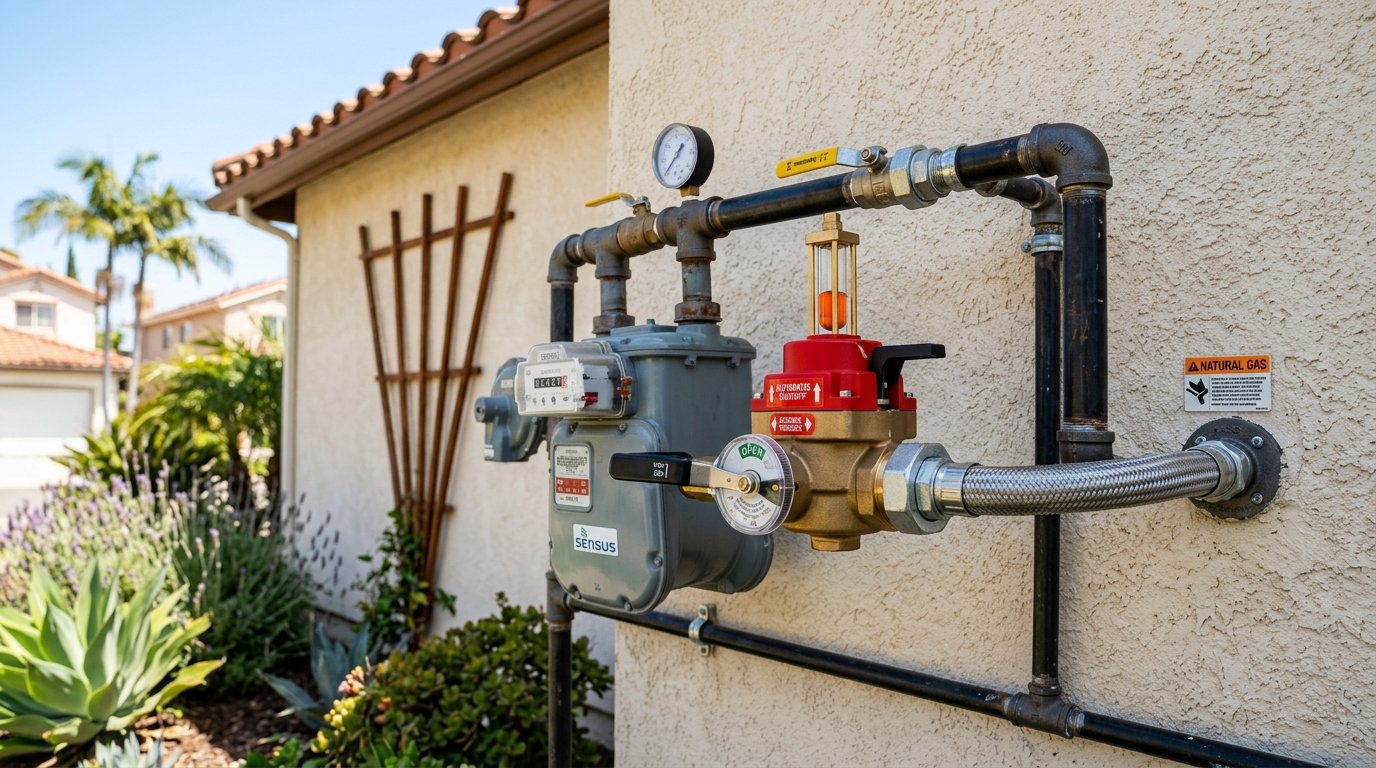
| Phase 2: Above-Ground Framing Rough-In | Installing water supply and vent piping through open wall studs and ceiling joists | Drilling joists, running Uponor PEX-a or Type L copper lines, installing vent stacks through roof, drop-ear fixture brackets, earthquake gas valve |
| Phase 3: Hydrostatic & Air Pressure Testing | Verifying 100% airtight and watertight integrity before drywall is hung | Pressurizing water supply lines to 100+ PSI; capping DWV stacks and filling with 10-foot head of water (water test) or 5 PSI air test; municipal inspection #2 |
| Phase 4: Finish Trim & Fixture Setting | Installing sinks, toilets, faucets, water heaters, and final trim after painting/tiling | Setting toilets on wax rings, connecting under-sink angle stops and braided supplies, commissioning water heaters, final city inspection & sign-off |
When to Seek Professional Plumbing Help
Plumbing systems operate in delicate hydraulic balance. When homeowners search for urgent help plumbing in Los Angeles, it is frequently due to systemic issues that require professional diagnostic tools:
- Water Hammer (Violent Banging in Walls): Sudden banging sounds when a washing machine or faucet shuts off indicate an acoustic shockwave. This occurs when air chambers become waterlogged or water pressure exceeds 80 PSI, requiring the installation of mechanical water hammer arrestors.
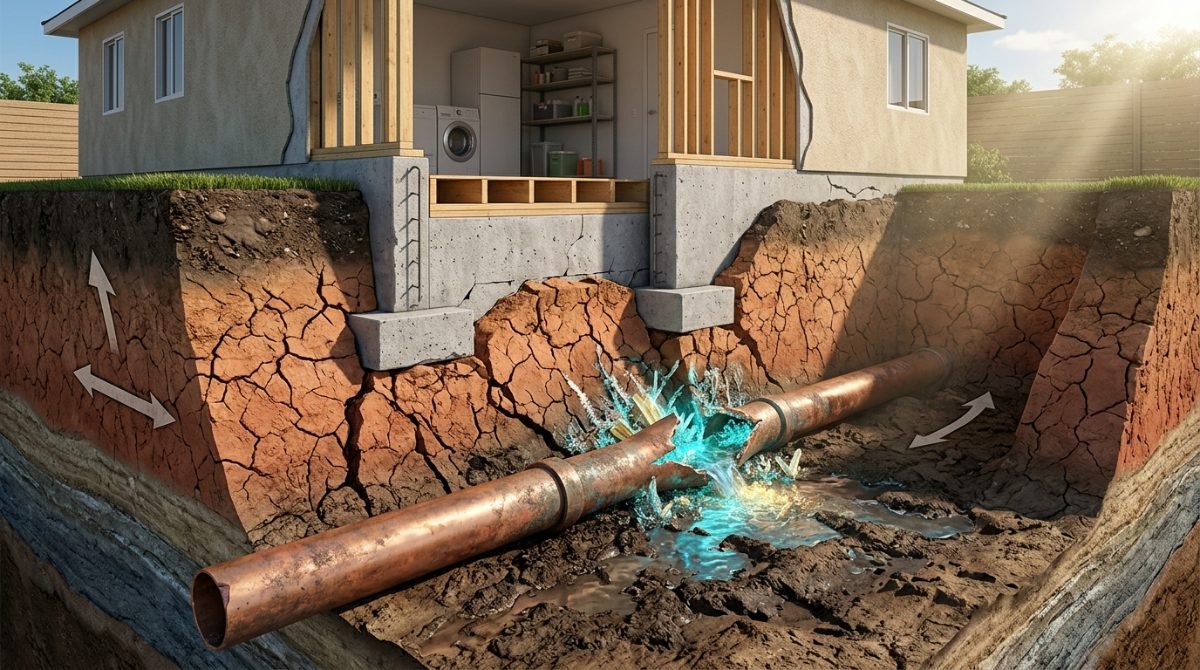
- Recurring Main Line Backups: If snaking a single drain does not resolve clogs, or if running your washing machine causes wastewater to back up into the downstairs shower, your main sewer lateral has suffered a blockage or structural collapse.
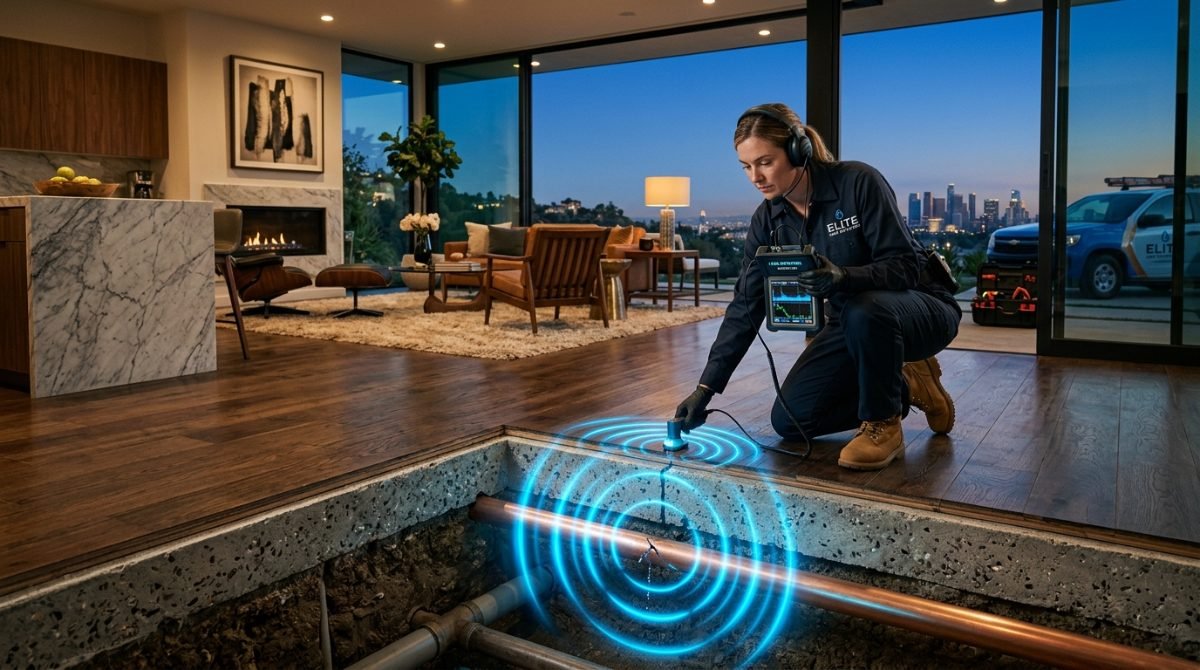
- Pinhole Slab Leaks: Warm damp spots on floors or unexplained spikes in your water bill require acoustic and thermal detection. Learn more in our Plumbing Pipe Repair Guide.
- Complete System Replacement: If your home contains original 1950s galvanized iron pipes with severe internal rust choke, a complete plumbing system installation and repipe is the only permanent solution. Review our full services on our Whole-Home Repiping page.
Whether you need emergency repairs in Los Angeles, Thousand Oaks, Encino, or Downey, our licensed California C-36 master technicians are available 24/7 with fully equipped response vehicles for fast, transparent service.
Need Professional Plumbing Help or a System Consultation?
From troubleshooting complex residential plumbing systems to engineered new plumbing system installation and rough-in repiping, trust Aquavo Plumbing's licensed master trade specialists.
This Isn't a Substitute for a Professional Inspection
These guides are designed to help you understand plumbing symptoms and technical options. If you suspect an active leak, sewer backup, or gas odor, contact our licensed C-36 technicians immediately for a safe evaluation.