Turn on a kitchen faucet or step into a hot shower anywhere in Encino, Sherman Oaks, or Santa Monica, and you immediately notice two things: a pungent chemical bleach smell and white chalky crust lining your fixtures.
Los Angeles tap water is technically compliant with federal baseline standards, but meeting legal maximum contaminant levels (MCLs) is not the same as pure, healthy water. Homeowners are increasingly concerned about chloramines, PFAS forever chemicals, microplastics, and heavy metals entering their bodies and plumbing infrastructure.
What Is in Los Angeles Tap Water?
Tap water delivered by the Los Angeles Department of Water and Power (LADWP) travels hundreds of miles through the California Aqueduct and Colorado River before reaching local homes. To prevent bacterial regrowth along this vast journey, LADWP disinfects using chloramines (a chemical bond of chlorine and ammonia).
- Chloramines vs. Free Chlorine: Chloramines do not dissipate into the air like standard chlorine. They remain in the water when heated in showers, producing aerosolized chemical vapors that cause dry itchy skin, respiratory irritation, and brittle hair.
- PFAS "Forever Chemicals": Per- and polyfluoroalkyl substances from industrial firefighting foam and manufacturing that never break down in human tissue or the environment.
- Aggressive Mineral Hardness: Tap water across the San Fernando Valley averages 14 to 22 GPG of calcium and magnesium, clogging fixtures and destroying water heaters.
Whole-House Filtration vs. Reverse Osmosis: The Key Difference
| Feature | Whole-House Filtration (POE) | Under-Sink Reverse Osmosis (POU) |
|---|---|---|
| Installation Location | Main water entry line (garage or exterior riser) | Under kitchen sink or dedicated beverage bar |
| Water Treated | 100% of household water (showers, sinks, laundry) | Drinking water, cooking, and refrigerator ice line |
| Primary Contaminants Removed | Chloramines, chlorine, volatile organic compounds (VOCs), sediment, rust | PFAS, lead, fluoride, nitrates, microplastics, arsenic, total dissolved solids (99%) |
| Flow Rate | High flow (10–15 GPM) with zero pressure loss | Filtered on-demand into dedicated stainless steel tap |
| Average Cost Installed | $1,800 – $3,400 | $550 – $850 |
1. Whole-House Catalytic Carbon Filtration (Point-of-Entry)
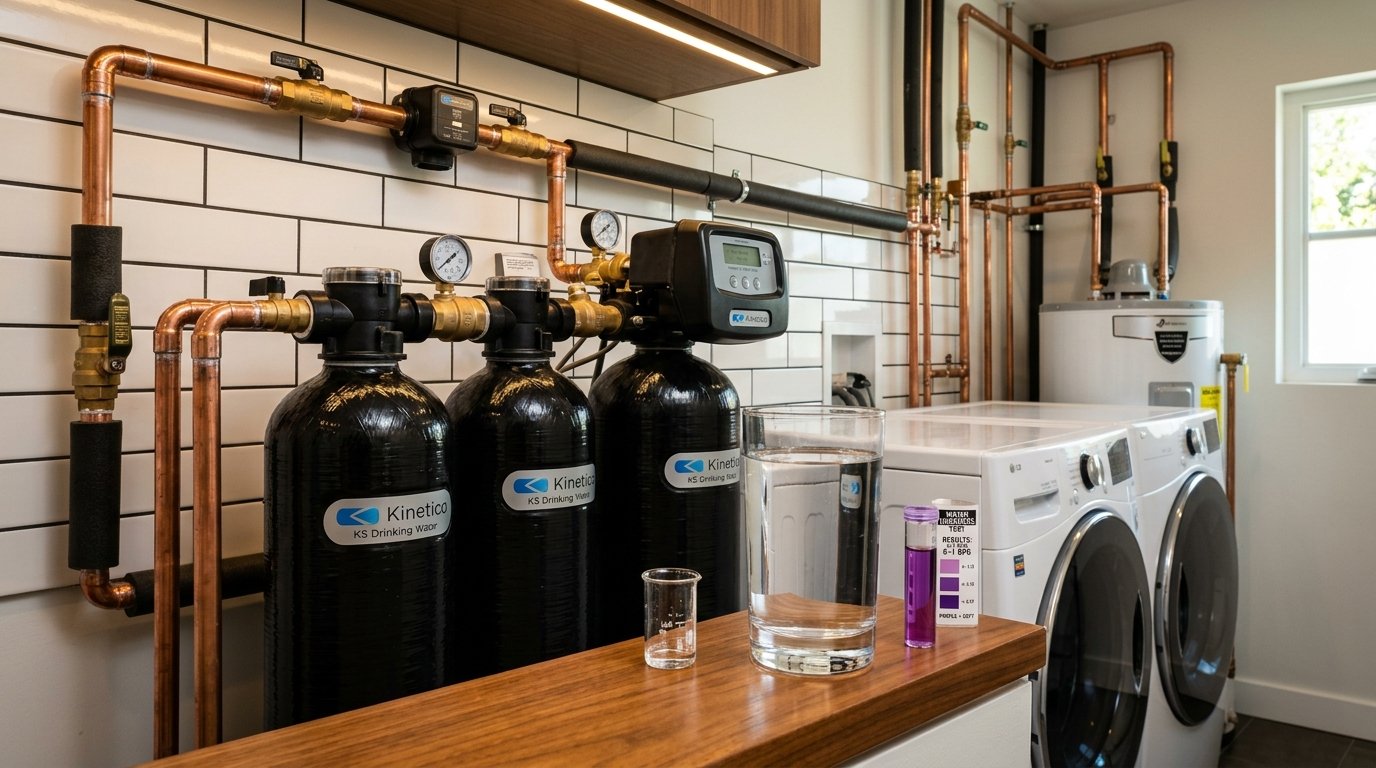
A whole-home system intercepts water the moment it enters your property from the city meter. It uses a high-capacity fiberglass tank loaded with acid-washed catalytic carbon media.
- Why Catalytic Carbon Is Essential in LA: Standard activated carbon (found in pitcher filters) cannot break the chemical ammonia bond in chloramines. Catalytic carbon has an enhanced surface structure that catalytically fractures chloramines, transforming harsh disinfectant chemicals into harmless chloride ions.
- Health Benefits: Eliminates chemical absorption through your skin during hot 15-minute showers. Prevents premature deterioration of rubber plumbing washers and toilet flappers.
2. Under-Sink Reverse Osmosis (Point-of-Use)
For pristine drinking and culinary water, nothing rivals a 5-Stage Reverse Osmosis (RO) system. Water is forced under pressure through a semi-permeable membrane with microscopic pores measuring 0.0001 microns—small enough to trap dissolved molecules, viruses, and toxic industrial chemicals.
- Removes 99%+ of PFAS Forever Chemicals: The EPA confirms that reverse osmosis is the most effective residential filtration technology for stripping PFOA and PFOS down to non-detectable levels.
- Remineralization Alkaline Cartridge: Premium systems include an alkaline post-filter that reintroduces healthy trace minerals (calcium, magnesium, potassium) to achieve crisp, refreshing pH 8.5+ drinking water.
Do You Still Need a Water Softener?
A common misconception is that a water filter replaces a water softener. Here is the engineering reality:
- Filters Remove Chemicals: They trap chloramines, bad tastes, and PFAS, but dissolved mineral ions (calcium/magnesium) pass right through carbon filters.
- Softeners Remove Minerals: Ion-exchange softeners remove calcium to prevent scale buildup on shower doors, tankless heat exchangers, and fixtures.
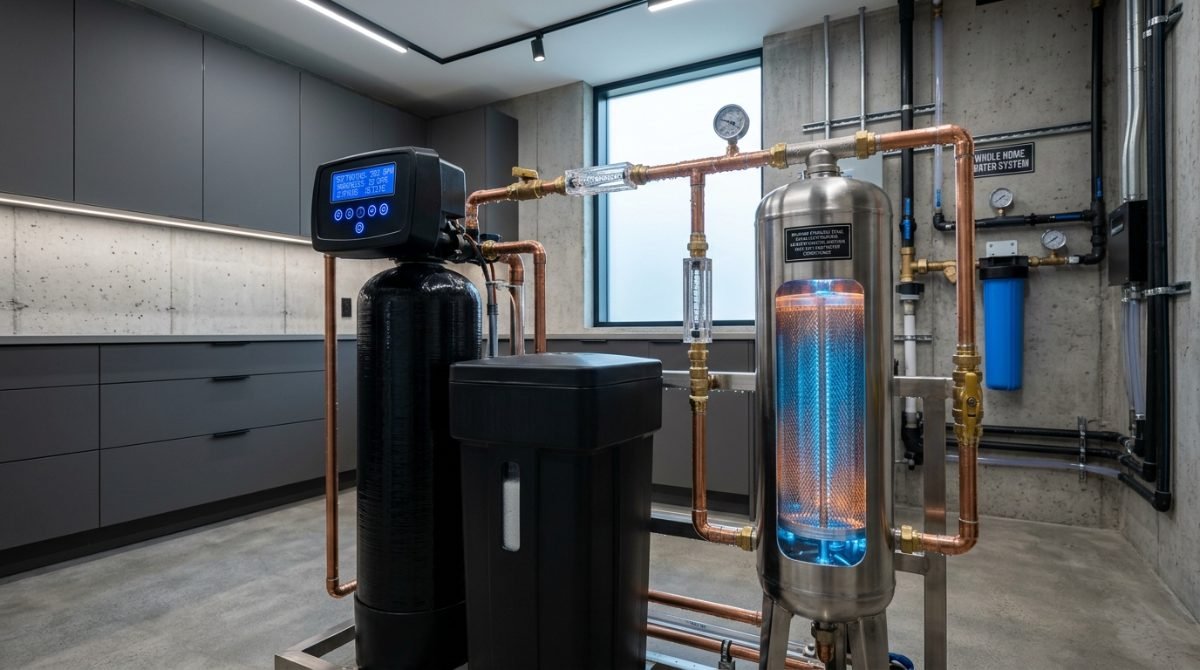
- The Ideal SoCal Setup: A dual-tank package featuring a Whole-House Catalytic Carbon Filter followed by a Salt-Based Water Softener, plus an Under-Sink RO for cooking and drinking. See our Salt vs. Salt-Free Softener guide.
Certified Installation by Aquavo Plumbing
Don't trust internet DIY filter kits that restrict flow or leak under high municipal pressure. Aquavo Plumbing designs custom NSF/ANSI-certified water treatment packages engineered specifically for San Fernando Valley water chemistry. Call (818) 238-9116 for a water test consultation.
Frequently Asked Questions: Water Filtration in LA
Why doesn't my Brita pitcher remove the chemical smell from LA water?
Standard pitcher filters contain simple bituminous activated carbon designed for free chlorine. LADWP uses chloramines (chlorine + ammonia), which bypass basic carbon filters. Removing chloramines requires high-grade catalytic carbon with sufficient contact time.
How often do reverse osmosis filters need replacement?
Pre-sediment and carbon block filters are replaced once every 12 months. The primary reverse osmosis semi-permeable membrane lasts 2 to 4 years depending on household water volume and incoming TDS levels.
Will a whole-house filter reduce my water pressure?
Not when properly engineered. Professional whole-house filtration tanks utilize 1-inch or 1.25-inch high-flow bypass control valves rated for 12 to 18 GPM, ensuring zero noticeable pressure drop even when multiple showers run simultaneously.
Does reverse osmosis waste water?
Older RO systems wasted 4 gallons of water for every gallon filtered. Modern high-efficiency systems installed by Aquavo use a 1:1 ultra-efficient permeate pump technology, reducing waste water by over 75%.